Vitamin D: The Sunshine Vitamin
Understanding vitamin D synthesis, functions, and significance for bone health and immune regulation
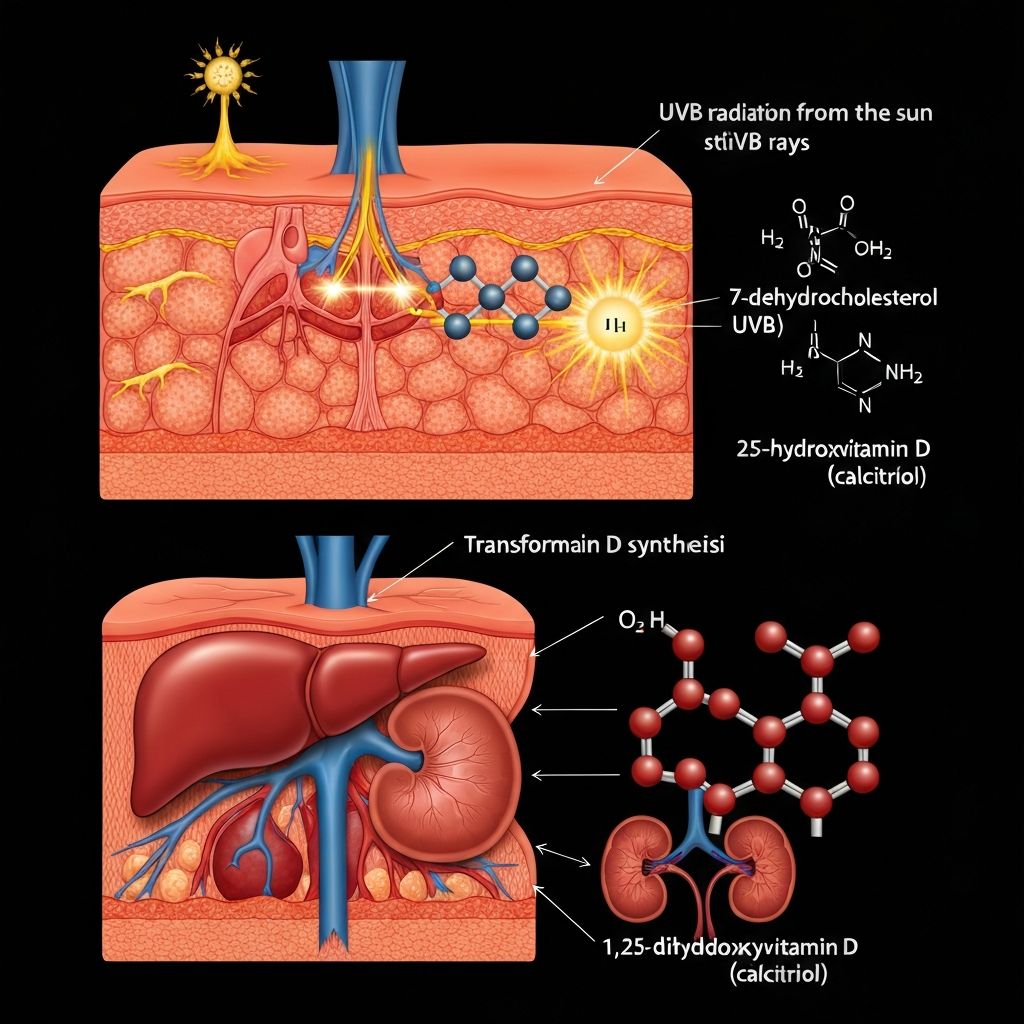
Vitamin D is uniquely synthesized through skin exposure to sunlight
Introduction
Vitamin D is a unique fat-soluble micronutrient that functions as a hormone in the human body. Unlike most vitamins, vitamin D can be synthesized endogenously through skin exposure to ultraviolet B (UVB) radiation, though it is also obtained through dietary sources. This dual pathway of acquisition makes vitamin D distinct among micronutrients.
Vitamin D Synthesis: The Role of Sunlight
When skin is exposed to UVB radiation, a cholesterol derivative in the skin (7-dehydrocholesterol) is converted to previtamin D3, which is then thermally converted to vitamin D3 (cholecalciferol). This naturally synthesized vitamin D3 is subsequently modified in the liver and kidneys to form the active form, calcitriol.
Factors Affecting Synthesis
Several factors influence vitamin D synthesis from sunlight:
- Latitude: Regions farther from equator receive less UVB radiation
- Season: Winter months have reduced UVB radiation
- Time of day: Midday sun is more efficient than early morning or evening
- Skin tone: Higher melanin reduces UVB penetration
- Age: Skin synthesis efficiency decreases with age
- Sunscreen use: SPF blocks UVB radiation
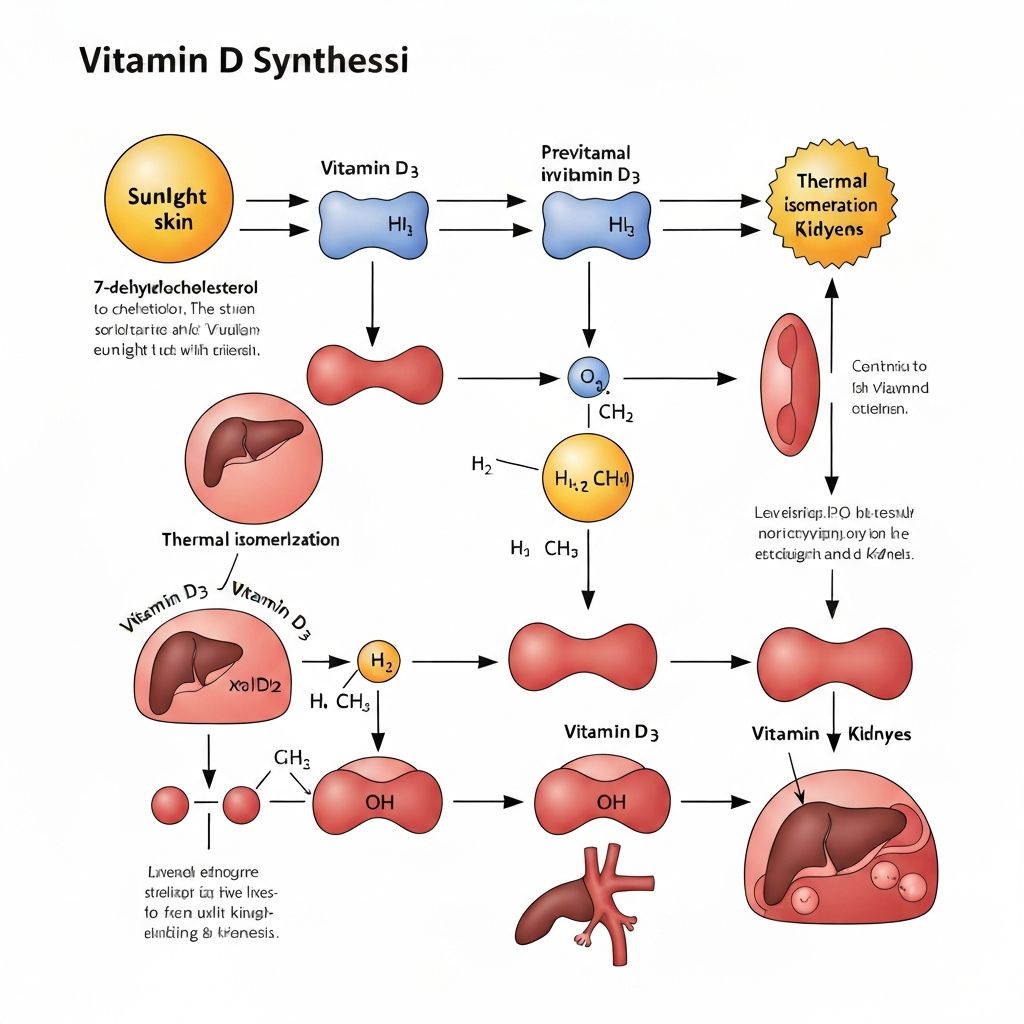
The pathway from sunlight to active vitamin D
Calcium Absorption and Bone Health
One of the primary functions of active vitamin D (calcitriol) is the regulation of calcium absorption from the digestive tract. In the intestines, vitamin D increases the expression of calcium-binding proteins, enhancing calcium uptake. This function is essential for:
Bone Formation
Adequate calcium is necessary for bone mineralization and maintenance of bone density.
Bone Remodeling
Vitamin D regulates osteoblast and osteoclast activity, cells responsible for bone formation and resorption.
Calcium Homeostasis
Vitamin D maintains serum calcium levels necessary for muscle contraction and nervous function.
Immune Function and Regulation
Beyond calcium metabolism, vitamin D plays crucial roles in immune regulation. Calcitriol receptors are found on immune cells, including T lymphocytes, macrophages, and dendritic cells. Vitamin D modulates:
- Innate Immunity: Enhances antimicrobial peptide production by macrophages
- Adaptive Immunity: Regulates T cell differentiation and function
- Inflammatory Response: Promotes anti-inflammatory cytokine production
- Immune Tolerance: Supports regulatory T cell differentiation
Other Physiological Functions
Beyond calcium and immune function, vitamin D influences numerous physiological processes:
- Muscle Function: Vitamin D receptors on muscle cells regulate contraction and strength
- Cardiovascular Health: Influences vascular endothelial function and blood pressure regulation
- Nervous System: Regulates neurotrophic factors and neuroprotection
- Cell Proliferation: Modulates cell growth and differentiation
- Gene Expression: Vitamin D receptor acts as a transcription factor
Dietary Sources of Vitamin D
Vitamin D is naturally present in relatively few foods. Primary dietary sources include:
Fatty Fish
- Salmon (600-1000 IU per 3.5 oz)
- Mackerel (400 IU per 3.5 oz)
- Sardines (270 IU per 3.5 oz)
Fortified Foods
- Milk (100-200 IU per cup)
- Cereals (40-400 IU per serving)
- Orange juice (100 IU per cup)
Other Sources
- Egg yolks (40 IU per yolk)
- Mushrooms (100+ IU per cup when exposed to sunlight)
- Beef liver (42 IU per 3.5 oz)
Recommended Intake
The recommended dietary allowance (RDA) for adult males is 600 IU daily for ages 19-50, and 800 IU for ages 51 and older. However, many experts suggest higher intakes based on current research.
Vitamin D Status and Deficiency
Vitamin D status is typically assessed by measuring serum 25-hydroxyvitamin D [25(OH)D]. General ranges include:
- Adequate: 20 ng/mL or higher
- Insufficient: 12-19 ng/mL
- Deficient: Below 12 ng/mL
Vitamin D deficiency can result in reduced calcium absorption, increased bone loss, and impaired immune regulation. Populations at higher risk of deficiency include those with limited sun exposure, people with darker skin tones in northern latitudes, and individuals with malabsorption disorders.
Conclusion
Vitamin D is a unique micronutrient synthesized through sun exposure and obtained through diet. Its roles in calcium metabolism, immune regulation, and numerous other physiological processes make it essential for overall well-being. Understanding the interplay between sun exposure, dietary intake, and individual factors supports informed decisions about maintaining adequate vitamin D status.
Related Articles
Essential Minerals in Men's Diet
Learn about minerals like calcium that work with vitamin D.
The Role of B-Complex Vitamins
Explore other essential vitamins and their metabolic functions.