Understanding Proteins and Amino Acids
Exploring the structure, function, and biological significance of proteins in human physiology
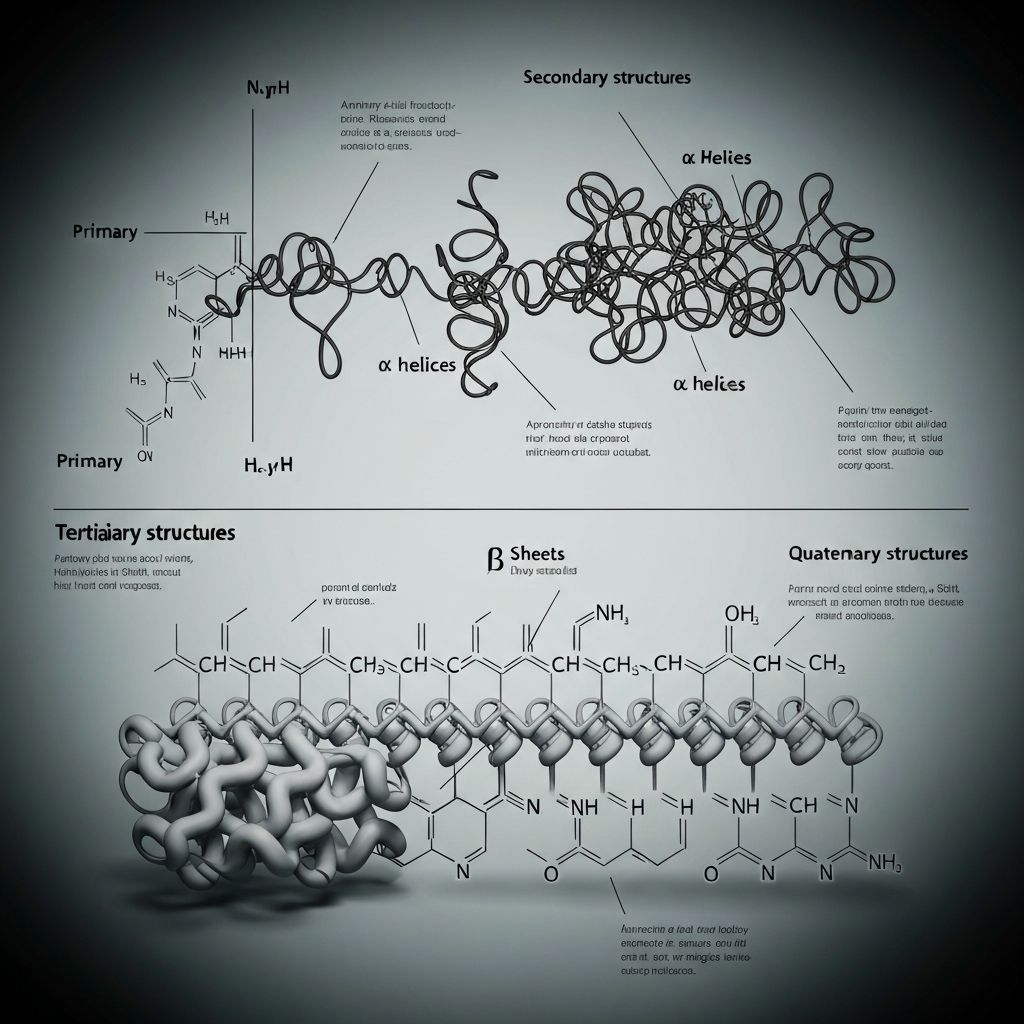
Proteins are complex polymers of amino acids with diverse structures and functions
Introduction
Proteins are one of the three essential macronutrients, alongside fats and carbohydrates. They are complex organic molecules composed of amino acids—organic compounds that serve as the building blocks of all protein structures in the human body. Understanding proteins and their biological roles is fundamental to comprehending human nutrition and physiology.
What Are Amino Acids?
Amino acids are small organic molecules containing both an amino group (–NH₂) and a carboxylic acid group (–COOH). There are 20 common amino acids found in human proteins, each with a unique side chain (R group) that determines its chemical properties.
Essential Amino Acids
Nine amino acids are classified as "essential" because the human body cannot synthesize them; they must be obtained through dietary sources. These include:
- Histidine – Important for immune function and tissue repair
- Isoleucine – Involved in muscle protein synthesis and metabolic regulation
- Leucine – Key signaling molecule for muscle protein synthesis
- Lysine – Necessary for collagen synthesis and calcium absorption
- Methionine – Source of sulfur atoms and methylation groups in metabolism
- Phenylalanine – Precursor to neurotransmitters like dopamine and epinephrine
- Threonine – Important for immune function and protein structure
- Tryptophan – Precursor to serotonin and involved in mood regulation
- Valine – Branched-chain amino acid involved in muscle metabolism
Non-Essential Amino Acids
The remaining 11 amino acids are classified as "non-essential" because the body can synthesize them from other compounds, such as α-keto acids or other amino acids. However, some are conditionally essential—they become essential during periods of intense exercise, illness, or stress when demand exceeds synthesis capacity.
Protein Structure and Function
Proteins are polymers—long chains of amino acids linked by peptide bonds. The sequence of amino acids is determined by genetic information encoded in DNA and is transcribed and translated through cellular machinery.
Protein Levels of Organization
Proteins have multiple structural levels:
- Primary Structure: The linear sequence of amino acids
- Secondary Structure: Local folding patterns (α-helices, β-sheets) stabilized by hydrogen bonds
- Tertiary Structure: 3D overall folding of the protein chain
- Quaternary Structure: Assembly of multiple protein subunits (when applicable)
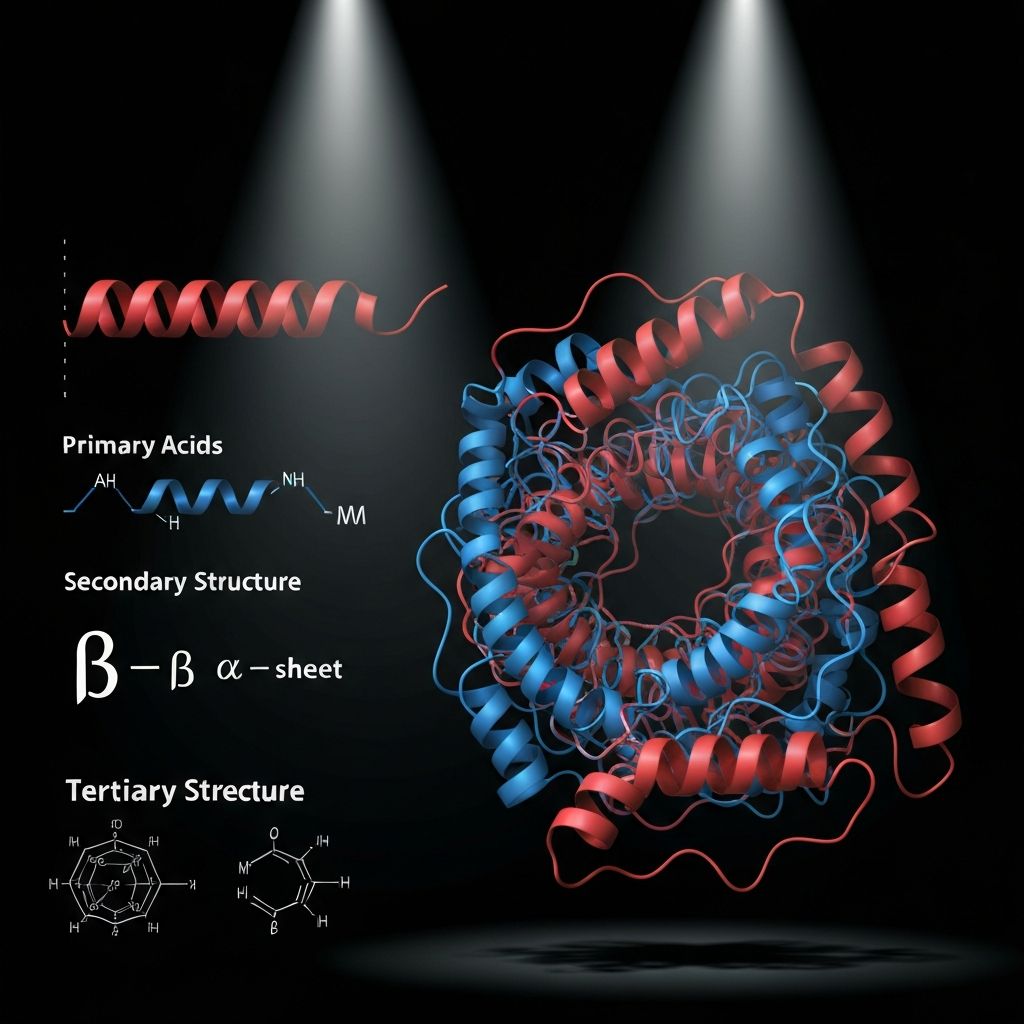
Proteins fold into complex 3D structures
Biological Functions of Proteins
Proteins are involved in virtually every biological process. Key functions include:
Enzymatic Catalysis
Enzymes, which are proteins, catalyze metabolic reactions—accelerating chemical reactions without being consumed in the process. Examples include digestive enzymes and metabolic enzymes.
Structural Support
Proteins like collagen, elastin, and keratin provide structural integrity to tissues—skin, bones, tendons, and ligaments.
Transport and Storage
Proteins transport essential molecules. Hemoglobin transports oxygen; lipoproteins transport lipids; ferritin stores iron.
Immune Defense
Antibodies are proteins that recognize and neutralize pathogens. Other immune proteins activate inflammatory responses.
Signaling and Regulation
Hormones like insulin and glucagon are proteins that regulate metabolic processes and maintain physiological homeostasis.
Muscle Contraction
Proteins like actin and myosin are responsible for muscle contraction and movement.
Protein Synthesis and Muscle Maintenance
The body is in a constant state of protein turnover—simultaneously synthesizing new proteins and breaking down existing ones. Protein synthesis is the process by which cells build new proteins using amino acids. This process is stimulated by:
- Adequate amino acid availability (particularly leucine)
- Mechanical tension from resistance exercise
- Sufficient energy intake
- Anabolic hormones (testosterone, IGF-1)
In adult males, maintaining protein intake supports the ongoing process of protein synthesis and helps preserve muscle mass, which naturally declines with age.
Dietary Sources of Protein
Complete proteins contain all nine essential amino acids in adequate quantities. Common sources include:
Animal Sources
- Meat (beef, pork, poultry)
- Fish and seafood
- Eggs
- Dairy (milk, cheese, yogurt)
Plant Sources
- Legumes (beans, lentils)
- Whole grains
- Nuts and seeds
- Tofu and tempeh
Combined Plant Sources
- Rice + beans
- Whole grain bread + peanut butter
- Hummus + whole wheat pita
Protein Digestion and Absorption
Dietary proteins must be broken down into amino acids and small peptides through digestion before absorption. This process begins in the stomach with the enzyme pepsin and continues in the small intestine where proteases complete digestion. Amino acids and dipeptides are then absorbed through the intestinal wall into the bloodstream for distribution to tissues.
Conclusion
Proteins, composed of amino acids, are fundamental macronutrients with diverse biological functions ranging from enzymatic catalysis to structural support to immune defense. Understanding their role in protein synthesis, muscle maintenance, and overall physiological function is essential for informed decisions about nutrition. Ensuring adequate protein intake from diverse dietary sources supports the body's ongoing need for protein synthesis and maintenance.
Key Takeaway: Proteins are diverse molecules with essential biological roles. Consuming adequate protein from varied sources ensures your body has the amino acids necessary for growth, repair, and physiological function.
Related Articles
Dietary Fats: Essential for Health
Explore the types and functions of dietary fats alongside proteins in a balanced diet.
Essential Minerals in Men's Diet
Learn about minerals that work alongside proteins in physiological processes.